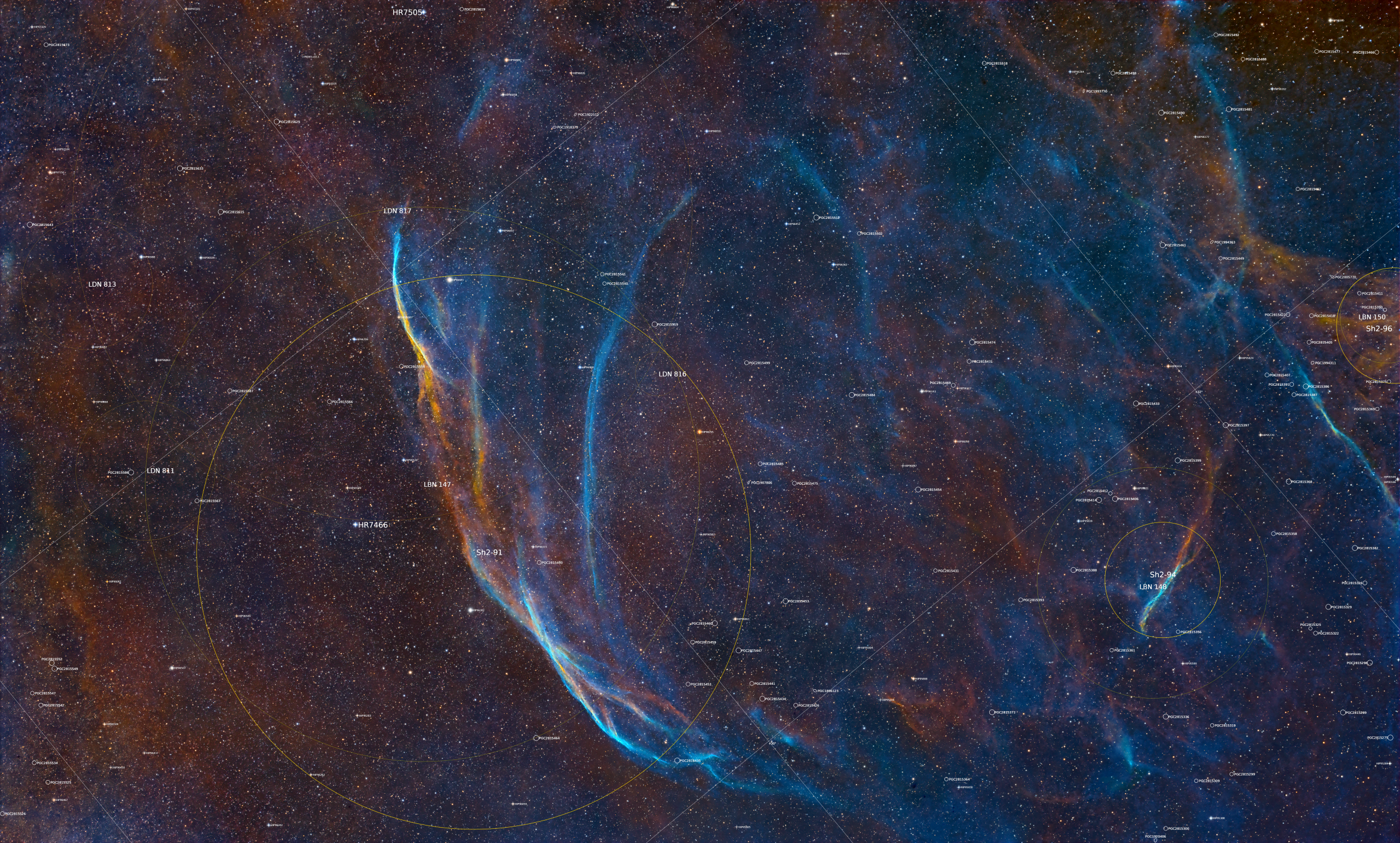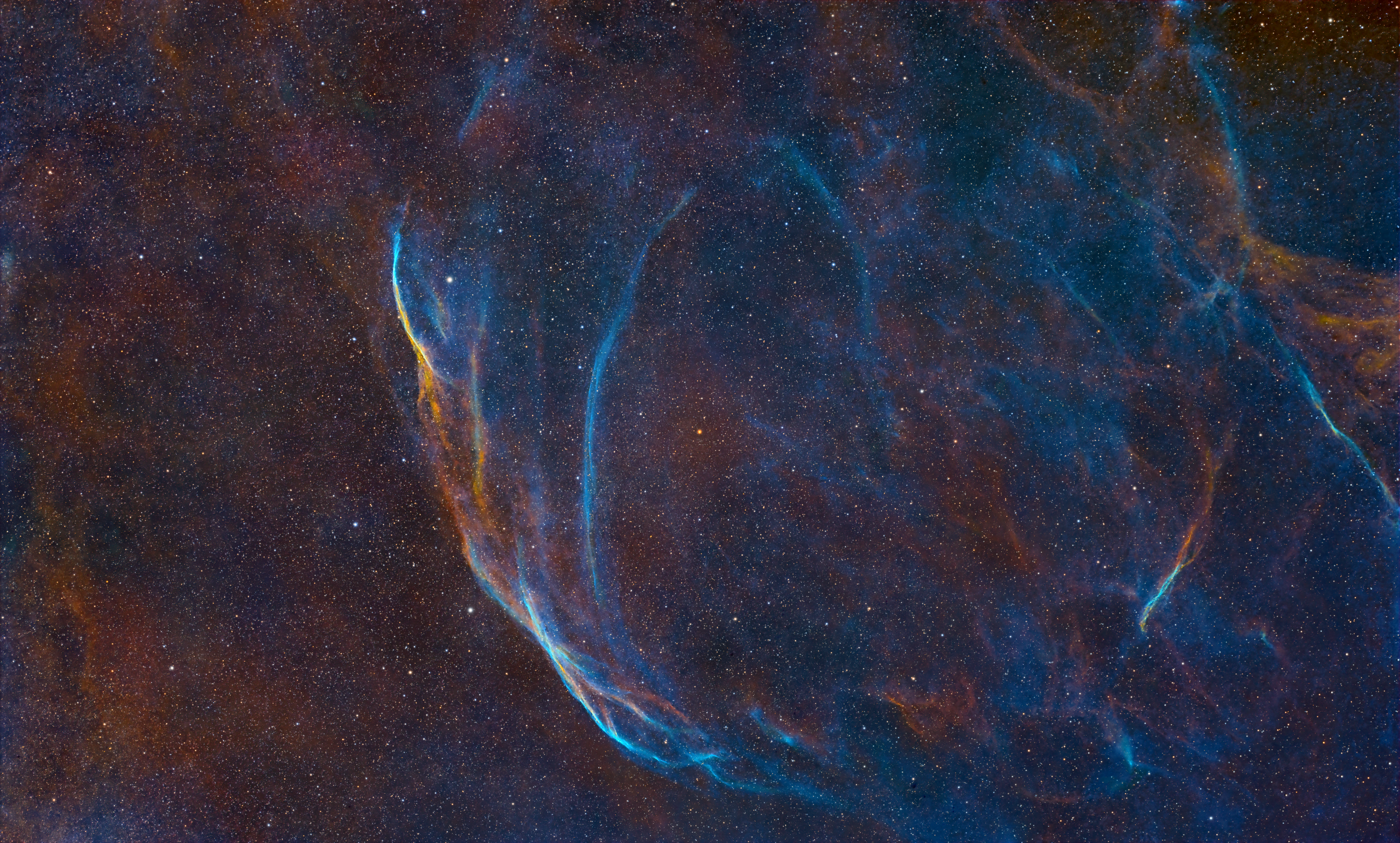
Campbell’s Hydrogen Star and the Area Around It SH2-91,SH2-94 and SH2-96
Campbell’s Hydrogen Star is a fascinating and unusual star found in the constellation Cygnus, the Swan. It is surrounded by a small cloud of glowing gas called a planetary nebula. The star is extremely hot and shines at the centre of this colourful cloud.
The area around Campbell’s Hydrogen Star is filled with material that the star has released into space. This gas glows because it is energized by the intense radiation from the hot central star. Hydrogen and other elements in the nebula produce beautiful reddish and bluish colours when viewed through a telescope.
Although the nebula is relatively small and faint, the region around the star is scientifically important. It gives astronomers an opportunity to study how stars change near the end of their lives and how they lose material into space.
Campbell’s Hydrogen Star is therefore not only an interesting star but also a beautiful example of the interaction between a dying star and the gas surrounding it. Its location in Cygnus makes it a remarkable object to explore in the night sky.
Sh2-91 (also catalogued as LBN 147) is a faint emission nebula and a prominent filamentary section of a a massive , ancient supernova remnant (SNR G065.3+05.7) located in the constellation of Cygnus. Often nicknamed “The Other Veil” or the “Shadow of the Veil”, it mimics the delicate, braided structure of the famous Veil Nebula but glows far more dimly, making it a highly sought-after trophy for advanced deep-sky astrophotographers.
Sharpless 94 (Sh2-94) is a faint emission nebula in the constellation of Cygnus. It forms a small, bright filament that is part of a much larger, faint supernova remnant shell known as G65.3+5.7 (or SNR 065.2+05.7), which also includes related arcs like Sh2-91 and Sh2-96
Sh2-96 is an extrememlt faint emission nebula and part of the supernova remnant SNG G065.2+5.7 in the constellation of Cygnus . Often called the Scarlet Letter Nebula because its glowing filaments resemble a capital “A”, it is a challenging target for astrophotographers requiring dozens of hours of narrowband exposure time
Acquisition details
Equipment
Telescope : William Optics 81GT
Mount : Skywatcher EQ6r Pro
Camera : ZWO 6200mm pro
Filters : Anitlia 2.5 Nm Ultra filters Ha, Oiii, Sii
Dates : 08/08/2026 – 14/08/2026
Frames : HA 300*41, Oiii 300*110, Sii 300*30
Total Time : 15Hrs 05 Minutes