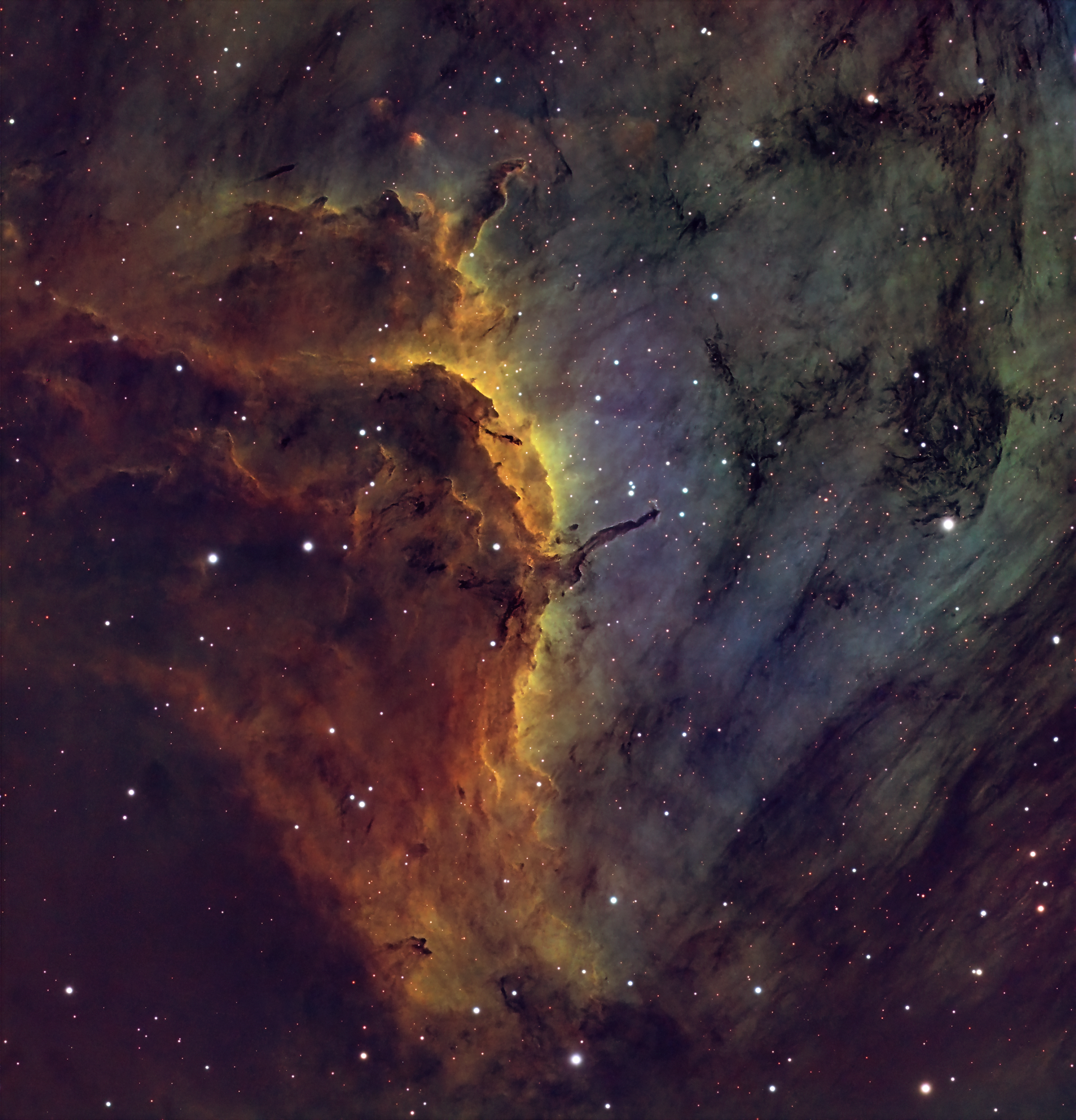
IC 5070 Pelican Nebula
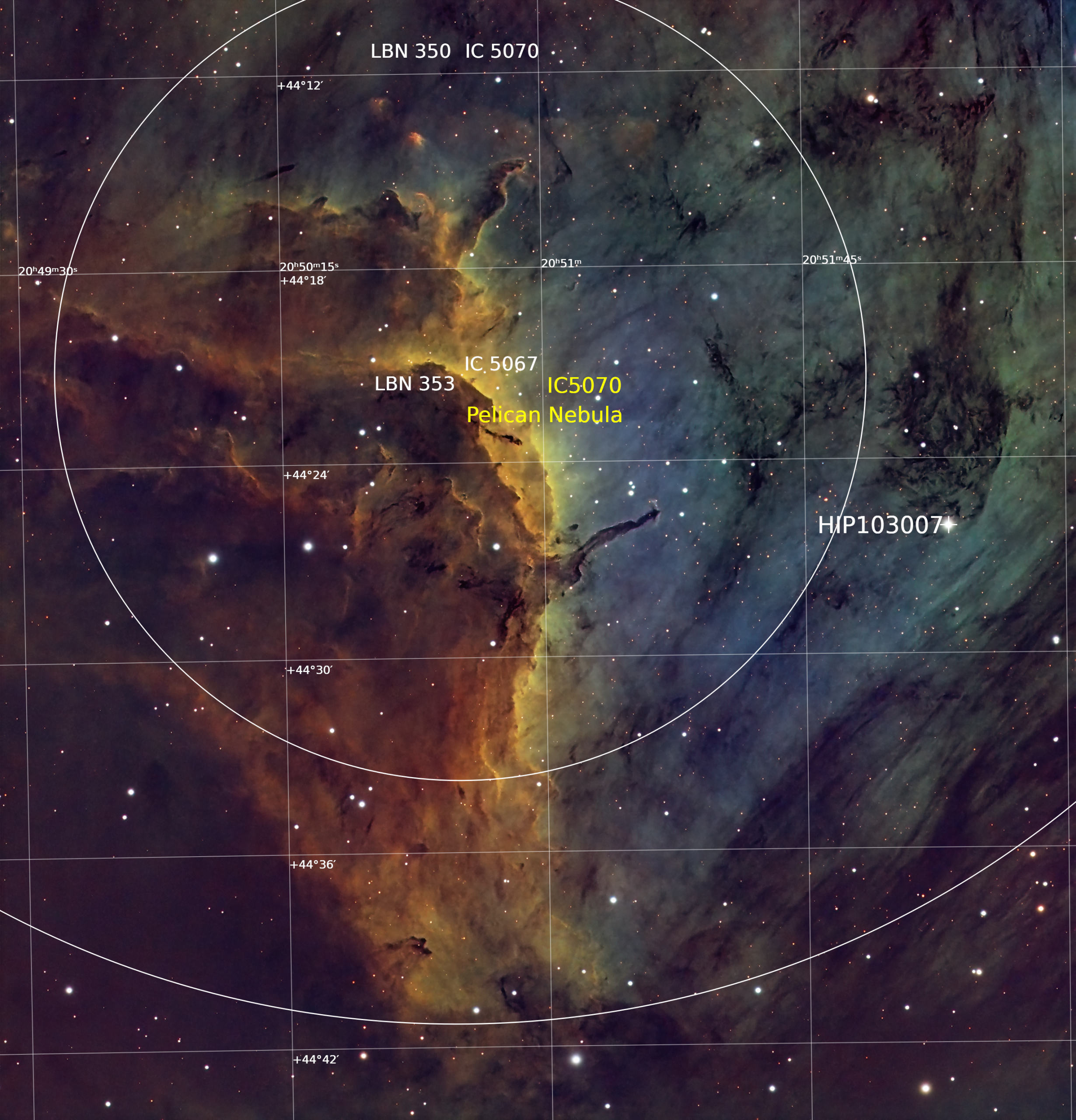
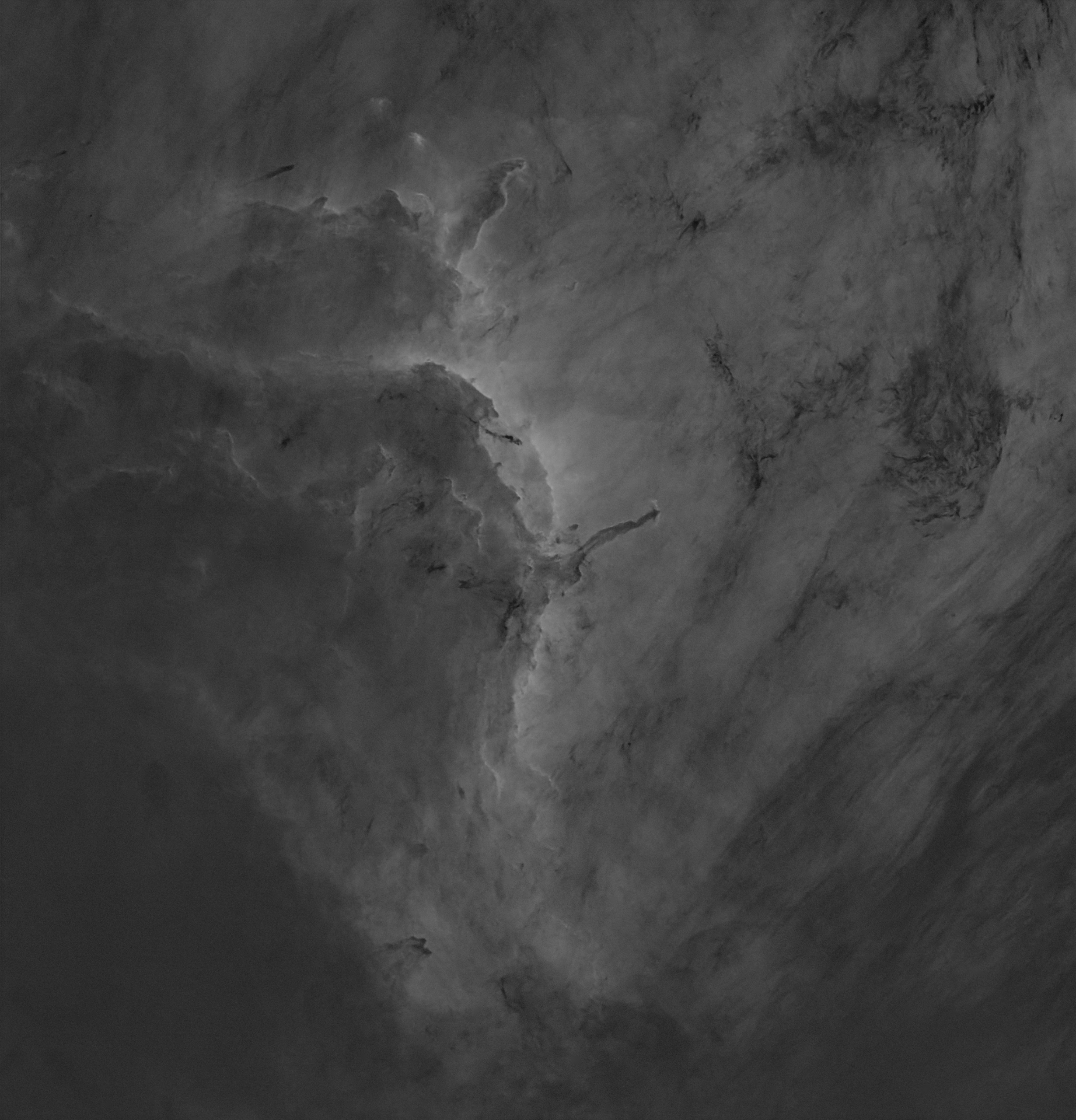
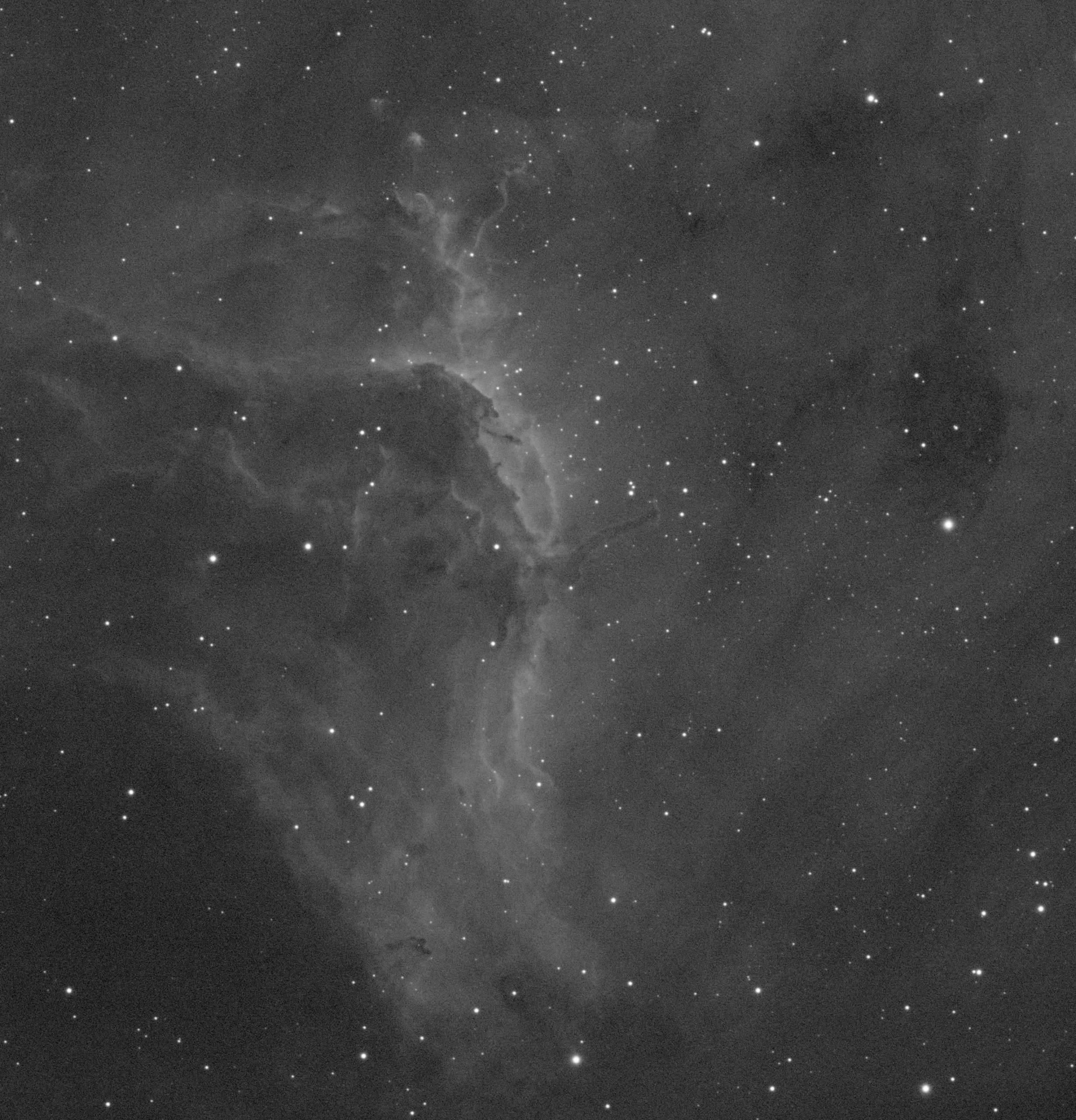
The Pelican Nebula is a vast cloud of interstellar gas and dust located about 1,800 light-years from Earth in the constellation Cygnus. Officially designated IC 5070, it forms part of the larger North America Nebula complex and is named for its striking resemblance to a pelican, with a long beak-like structure extending into space.
This emission nebula glows with a deep red hue as intense ultraviolet radiation from nearby young stars ionizes its hydrogen gas. Within its dense clouds, new stars are actively forming, making the nebula an important region for studying stellar birth and evolution. Dark lanes of dust weave through the glowing gas, sculpted by stellar winds and radiation that continuously reshape the nebula’s appearance.
The Pelican Nebula spans roughly 30 light-years and contains numerous Bok globules—small, dense pockets of gas and dust where future stars may emerge. Through telescopes and long-exposure astrophotography, intricate details become visible, revealing pillars, ridges, and cavities carved into the nebula by energetic young stars.
Together with the neighboring North America Nebula, the Pelican Nebula presents one of the most impressive star-forming regions in the night sky, offering astronomers and stargazers alike a glimpse into the dynamic processes that create new generations of stars.
One of the most imaged areas of the sky, great for Amateurs and Pros depending on depth that folk want to go. the whole area is a great starting point for new starters to the hobby.
This is the first of many detailed images of this area of the sky, currently in the process of 16 panel mosaic, 8 parts have already been imaged and in process of processing as you can imagine its time consuming. Will be picking out various points of interest within the mosaic. Some notable targets like Crescent, Elephant Nebula. This is a long term project and weather permitting will grab as much as possible. I’m using various focal lengths from 478 up-to 1422. and a variety of cameras from 533mm to 6200mm pro and various filters.
This image was acquired with an Askar 151PHQ with ASI533mm Pro.
Acquisition details
Equipment
- Imaging Telescopes Or Lenses
- Askar 151PHQ
- Imaging Cameras
- ZWO ASI533MM Pro
- Mounts
- Sky-Watcher EQ8-R Pro
- Filters
- Antlia 3nm Narrowband H-alpha 2″ · Antlia 3nm Narrowband Oxygen III 2″ · Antlia 3nm Narrowband Sulfur II 2″ · Antlia V-Pro Blue 2″ · Antlia V-Pro Green 2″ · Antlia V-Pro Red 2″
- Software
- Adobe Photoshop · Pleiades Astrophoto PixInsight
- Dates:
- Frames:
-
Antlia 3nm Narrowband H-alpha 2″: 50×300″(4h 10′)
Antlia 3nm Narrowband Oxygen III 2″: 40×300″(3h 20′)
Antlia 3nm Narrowband Sulfur II 2″: 46×300″(3h 50′)
Antlia V-Pro Blue 2″: 50×60″(50′)
Antlia V-Pro Green 2″: 50×60″(50′)
Antlia V-Pro Red 2″: 50×60″(50′)Integration:13h 50′
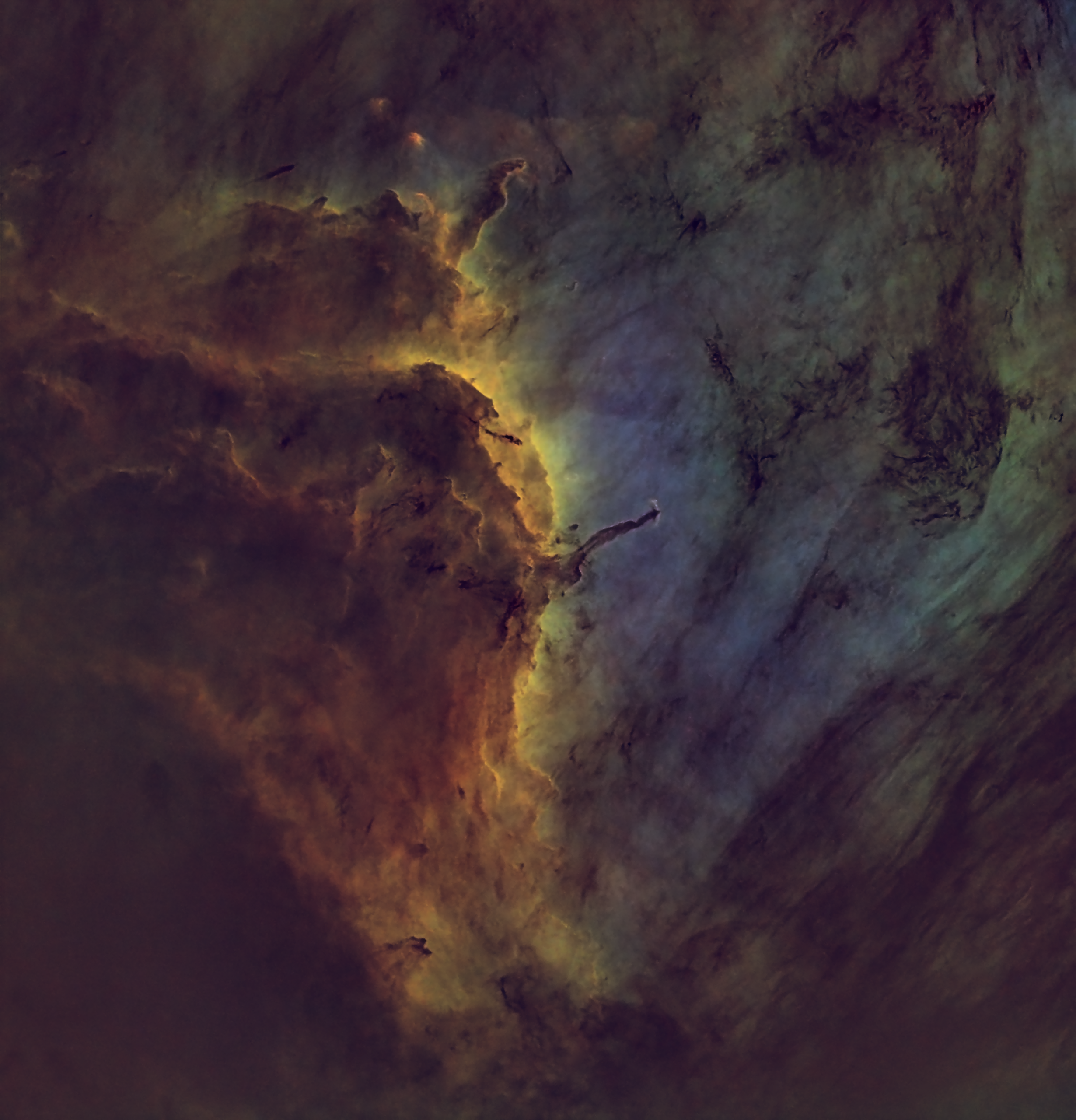
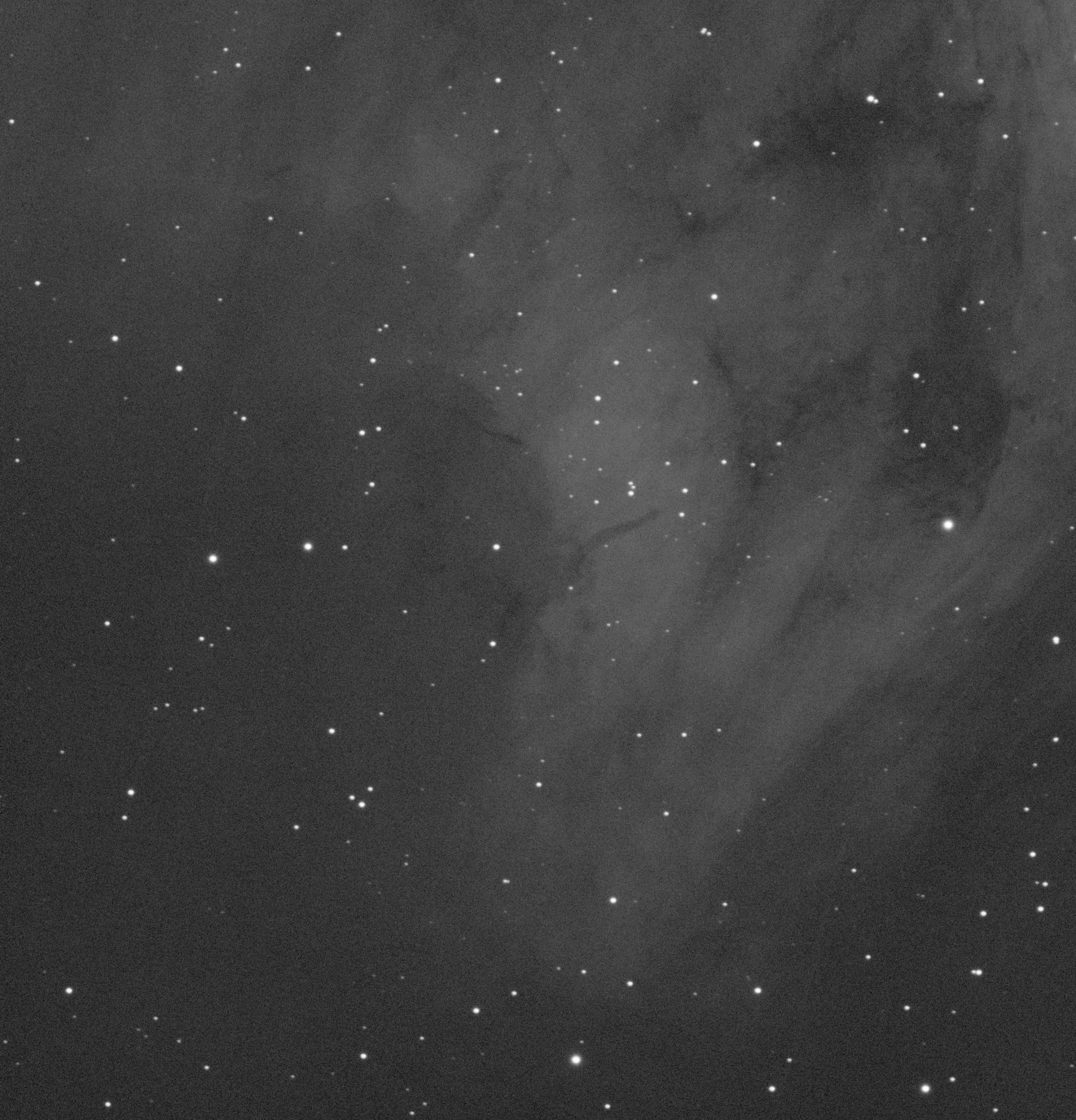
Oiii |
Ha |
SII |